
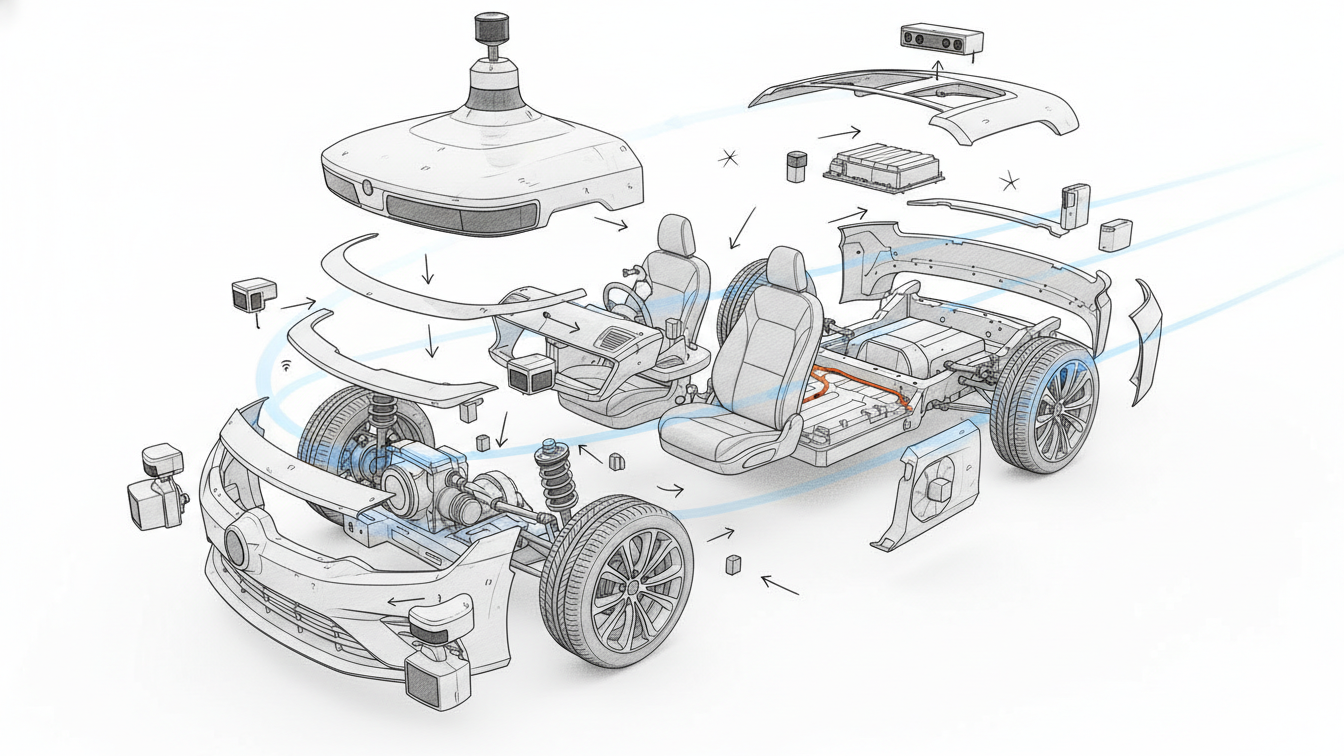
1. Sensor & Perception System
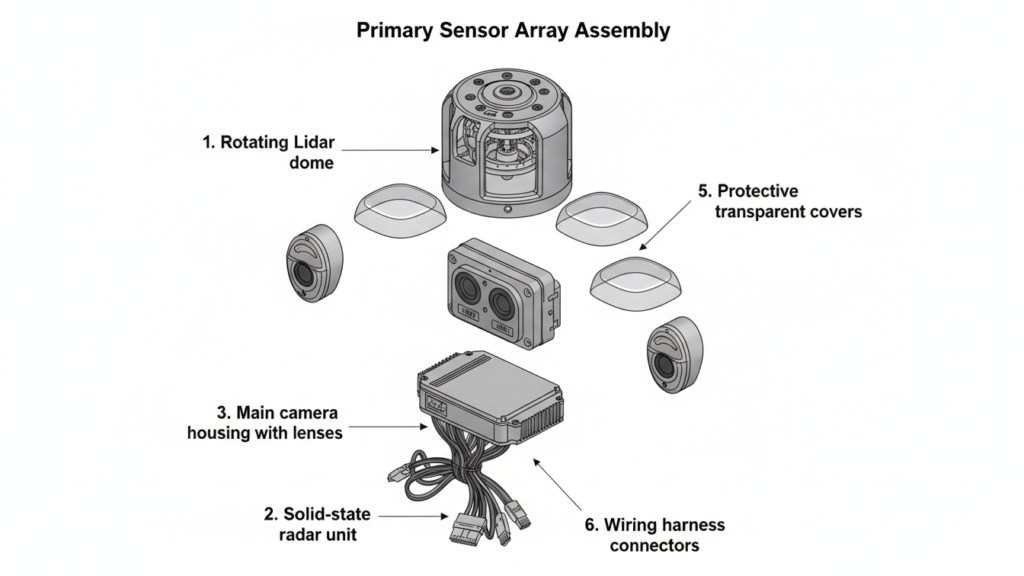
It is a group of devices equipped with different technologies. It views the surrounding world in 360 degrees and also creates a 3D map. It has major devices like lidar: Measures the size and distance of objects through laser beam. It is installed in a rotating dome on the roof. Radar: The speed and distance of distant objects (like vehicles) can be measured through radio waves. It also works in rain and fog. Camera: Sees traffic lights, road markings and pedestrian faces. These are installed at different places on the side mirror and main grill. Ultrasonic devices: Select very close objects during parking.
2. AI Computing Uni
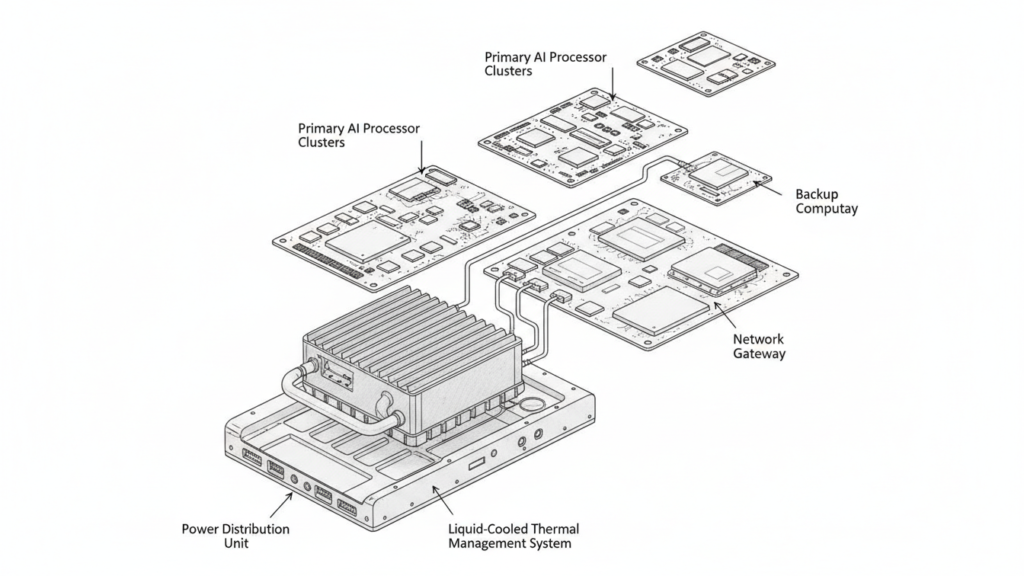
What’s in it? The car’s “command center” or “brain.” Function: Analyzes millions of data points from all sensors in a thousandth of a second to determine the next action—accelerate, brake, or turn. Features: It’s as powerful as a supercomputer, based on deep learning algorithms and artificial intelligence (AI).
3. Chassis & Safety Structure
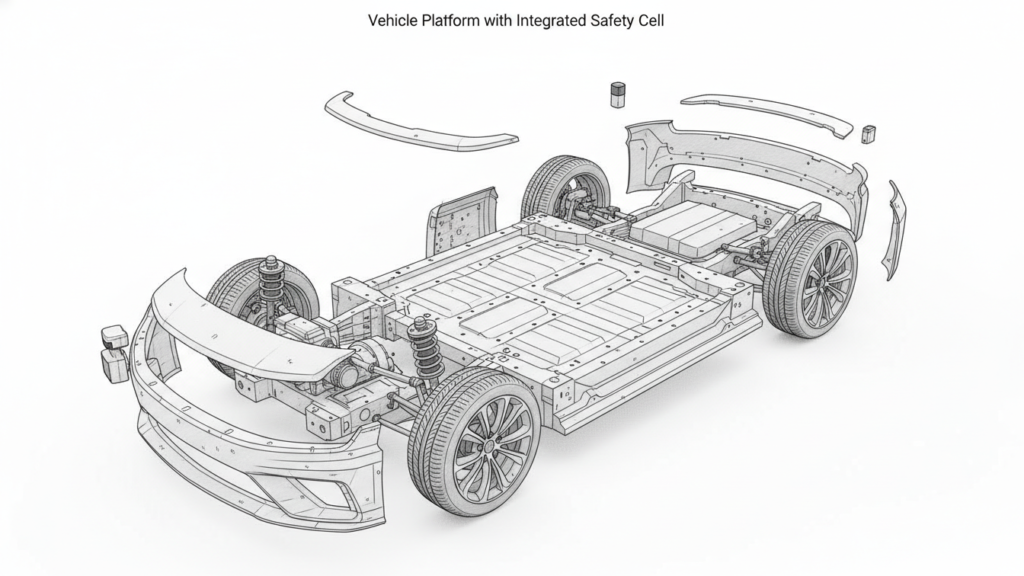
What’s in it? The “bones and skeleton” of the car. Function: Strengthens the entire car and keeps passengers safe in a secure “safety cell.” Heavy parts like batteries, motors, and sensors are attached to it. Features: In self-driving cars, this flat, sturdy structure often resembles a “skateboard,” allowing for more space inside.
4. Battery & Powertrain
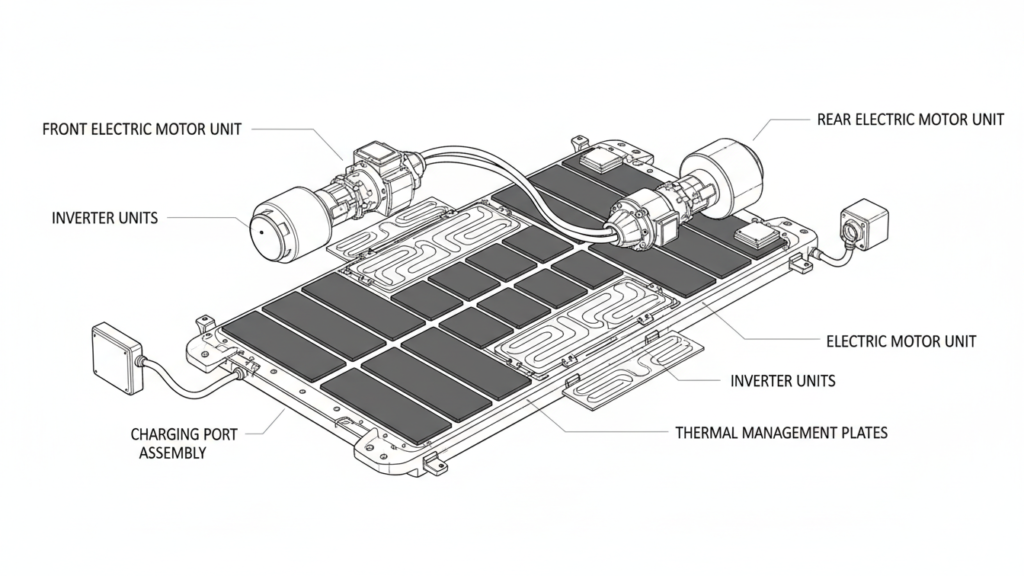
What’s in it? The “heart and muscles” of the carFunction: Provides energy to propel the car (battery) and transmits that energy to the wheels to generate motion (powertrain)· Structure: Battery pack: Mounted under the floor, the car balances better.· Electric motor: Individual motors can be installed on each wheel, providing greater control.
5. Wheel & Steering Assembly
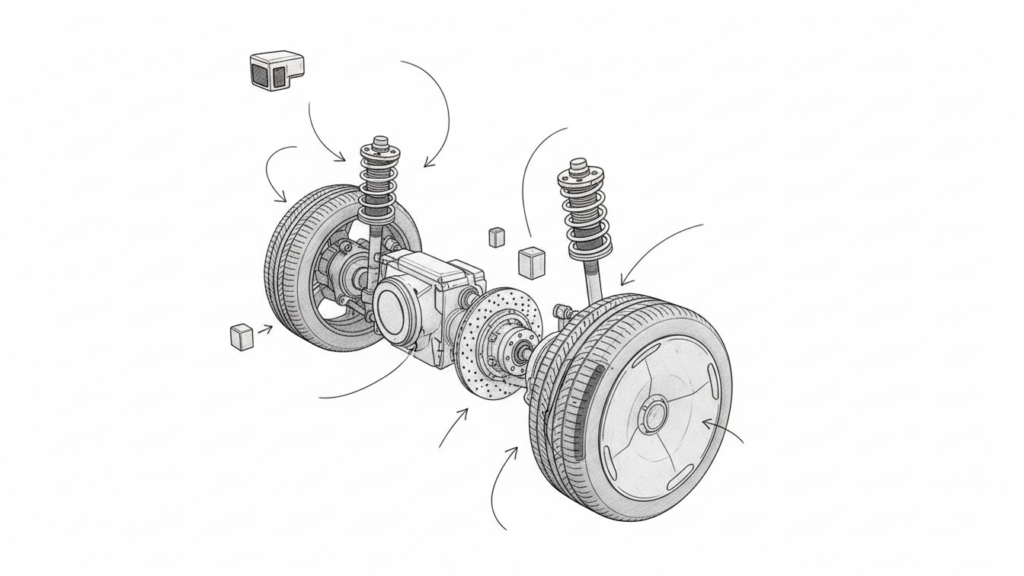
What’s in it? The car’s “legs” functions: Precise turning, accelerating, decelerating, and stopping at the command of an AI computer. It features “By-Wire” technology, which allows electric signals to replace traditional mechanical links (steering shafts). Advantages: This makes the car’s movements very precise and fast.
6. Interior Cabin
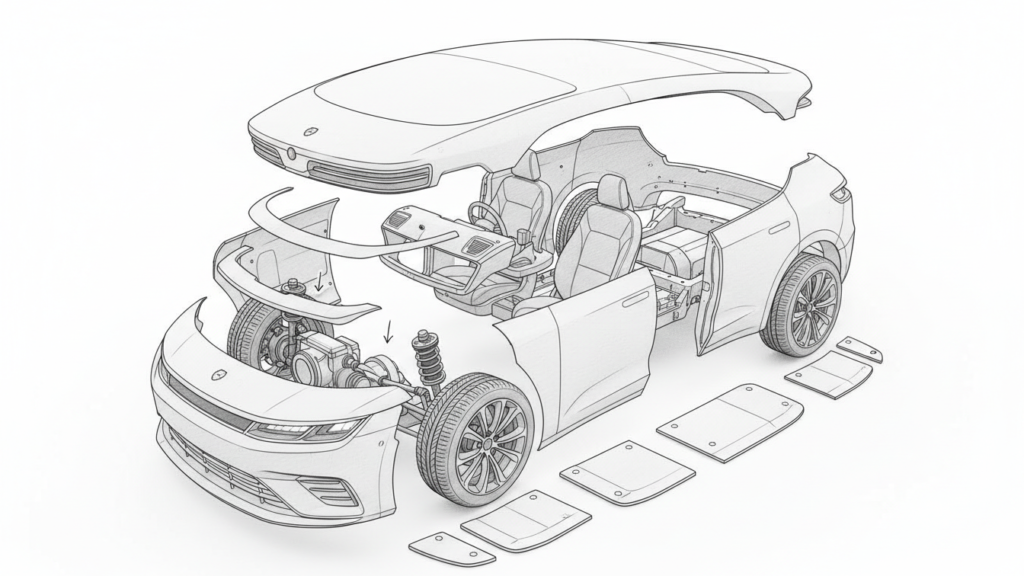
What’s in it? A “lounge or living room” for passengers. Function: Because there’s no driver, the interior design focuses on comfort and productivity. Features: Folding tables and rotating seats. Large screens for both work and entertainment. Cabin surveillance: Cameras for passenger safety.
7. Connectivity Suite
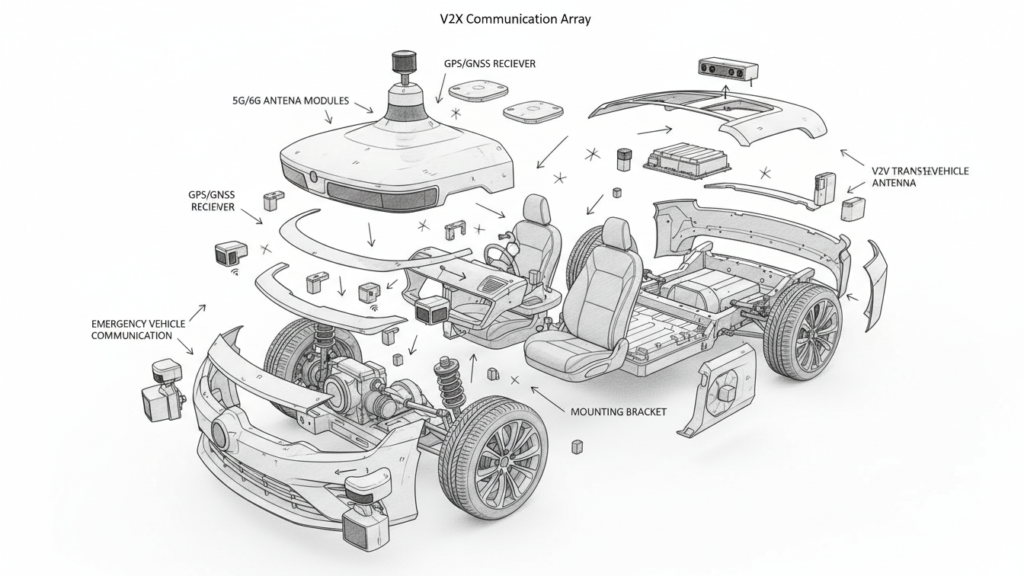
What’s in it? The car’s “communication system.” Function: Connecting the car to the outside How: · V2X (Option-to-Everything): Communicating with other cars (V2V), traffic lights (V2I), and road infrastructure in real time (e.g., seeing a red light at the next intersection) · 5G and 6G internet: Continuous high-speed connectivity · Outside-in (OTA) updates: Remotely upgrading the car’s or smartphone’s software