
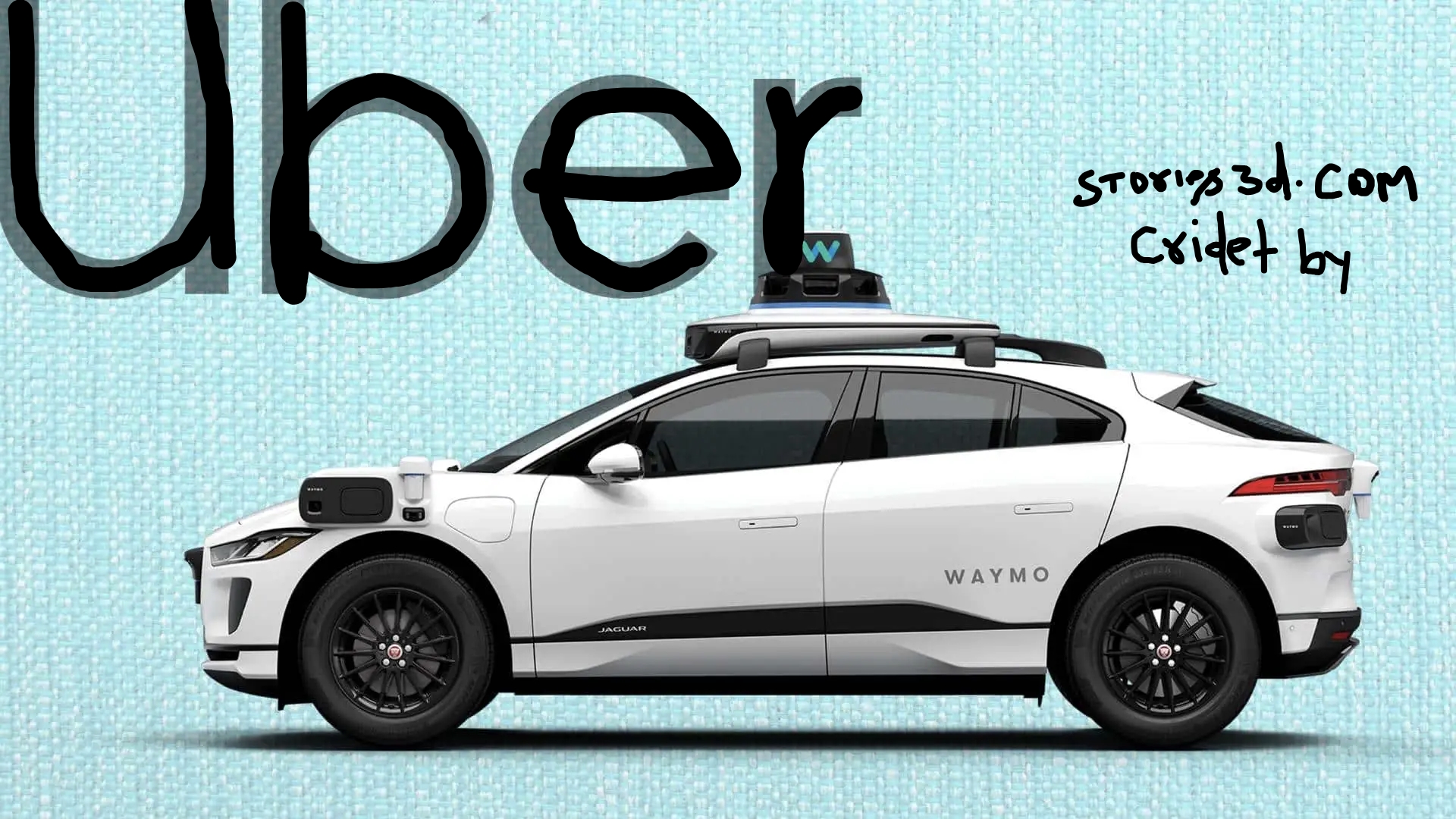
For years, self-driving cars felt like a Silicon Valley science project.
Now they’re carrying real passengers.
Companies like Tesla, Waymo, and several Chinese firms are pushing robotaxis onto public roads. In some cities, people can already open an app, request a ride, and get picked up by a car with no human driver behind the wheel.
That raises a simple question:
Will Uber drivers survive?
The robotaxi race has already started
Waymo vehicles are completing hundreds of thousands of paid rides every week in parts of the United States. Tesla is betting heavily on its autonomous driving technology and plans to expand robotaxi services over the next few years.
The goal is obvious.
Remove the driver.
A human driver is the biggest operating cost in ride-hailing. If a company can replace that cost with software, profits change dramatically.
That’s why billions of dollars are flowing into autonomous driving.
Why companies love robotaxis
A robotaxi doesn’t take breaks.
It doesn’t call in sick.
It can operate day and night if the vehicle has enough battery power and charging access.
For ride-hailing companies, that means more trips per vehicle and lower long-term costs.
Investors love that math.
Consumers might like it too if fares become cheaper.
The problem nobody has solved yet
Driving is messy.
Construction zones appear overnight.
Pedestrians behave unpredictably.
Weather changes road conditions in seconds.
Humans handle these situations using judgment and experience. Software still struggles with many edge cases.
That’s why robotaxis are expanding slowly instead of appearing everywhere at once.
The technology works impressively well in some places. Scaling it to every city is a different challenge.
What happens to Uber drivers?
The answer depends on where they drive.
Drivers in large cities with strong robotaxi deployments could face competition sooner.
Drivers in smaller cities may have years before autonomous vehicles become common.
Many transportation experts expect a mixed period where human drivers and robotaxis operate side by side.
Think about elevators.
Buildings once needed elevator operators.
Automation removed that job, but it happened gradually, not overnight.
Ride-hailing may follow a similar path.
Uber’s difficult position
Uber built one of the world’s largest transportation networks.
But it doesn’t manufacture cars.
If robotaxis become widespread, Uber must work with autonomous vehicle companies or develop partnerships that keep it relevant.
The company has already started collaborating with autonomous vehicle operators in several markets.
Uber understands what’s coming.
The question is how much of the future transportation market it can control.
Could robotaxis create new jobs?
History suggests technology often removes some jobs while creating others.
Robotaxi fleets will need:
Remote operators, Fleet managers , Maintenance technicians , Charging infrastructure specialists , AI safety teams
Those jobs won’t necessarily replace every driving position, but they will become part of the new transportation economy.
So, will Uber drivers survive?
For now, yes.
Millions of rides still depend on human drivers every day.
But the industry is changing.
Robotaxis are no longer a futuristic concept. They’re operating on real streets, carrying real passengers, and attracting massive investment.
The next decade will determine whether human drivers remain the backbone of ride-hailing or become a smaller part of a transportation system increasingly controlled by software.